Skip to content
Jpatersonsons.

The sink guide

A tidy, quick-drying sink — by habit, not luck.

Four short chapters on choosing, using and caring for the hardware that keeps the busiest corner of your kitchen working.

Choose the right strainer
01

Choose the right strainer

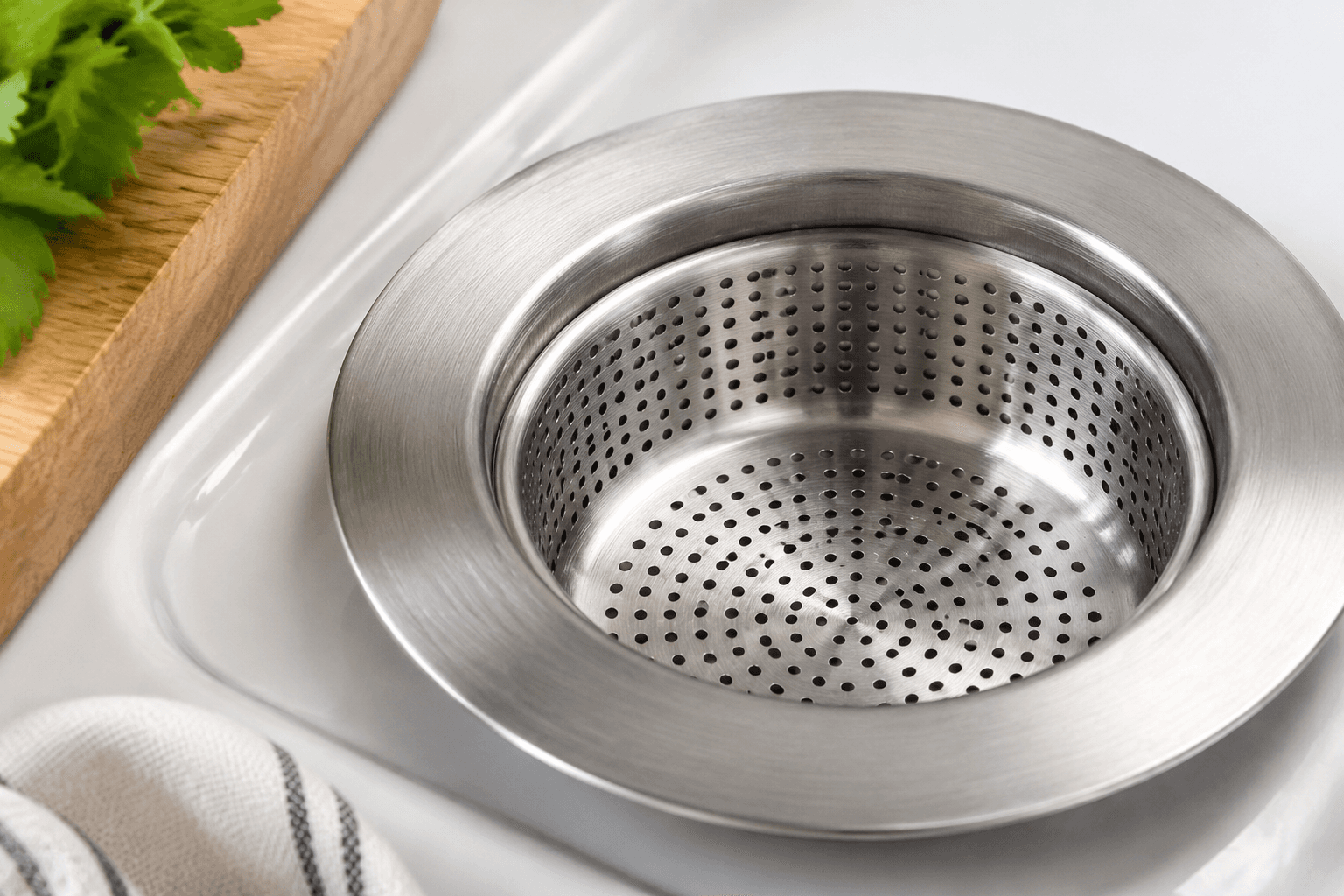
Measure your drain opening before buying — most kitchen sinks take a 3.5" (89 mm) basket. Look for 304 stainless steel for rust resistance, and a fine perforation that catches scraps while letting water through quickly. Keep a spare so one can dry while the other works.
Dry smart, not hard
02

Dry smart, not hard

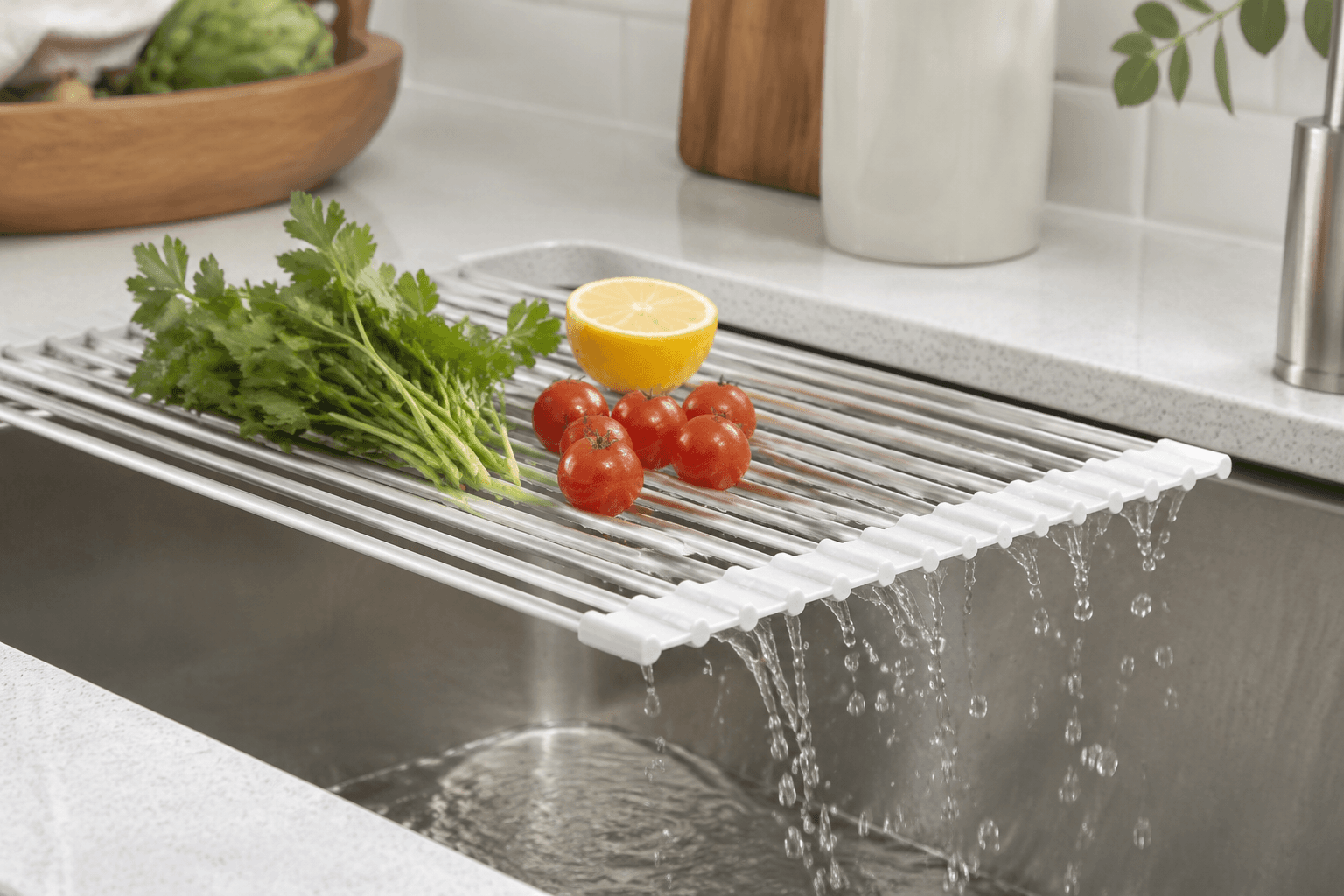
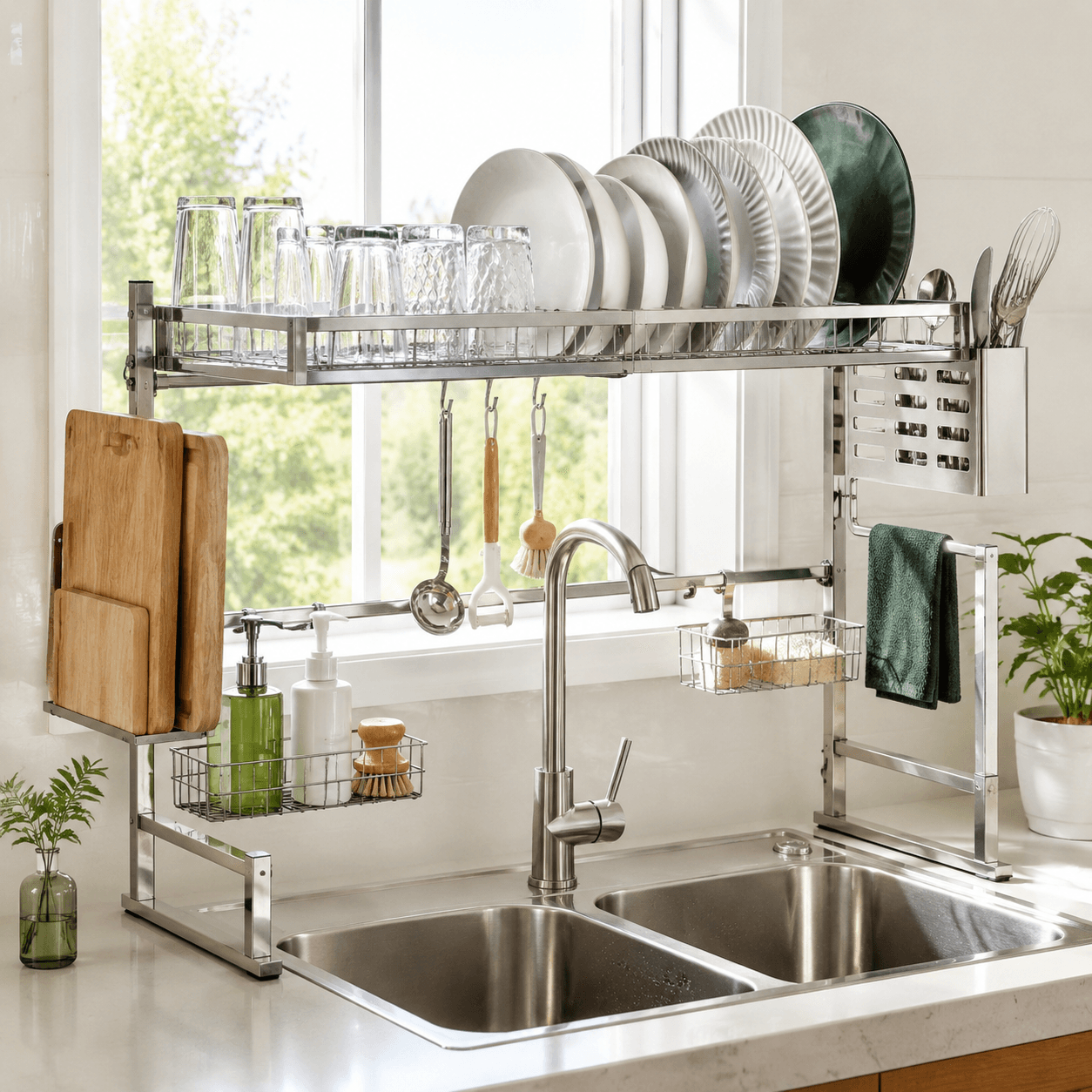
Drying racks that sit over the sink drain straight into the basin, so water never reaches the worktop. Roll-up silicone racks store flat and double as a trivet. For small kitchens, a telescopic shelf adds a tier without drilling.

Care for food-grade silicone
03

Care for food-grade silicone

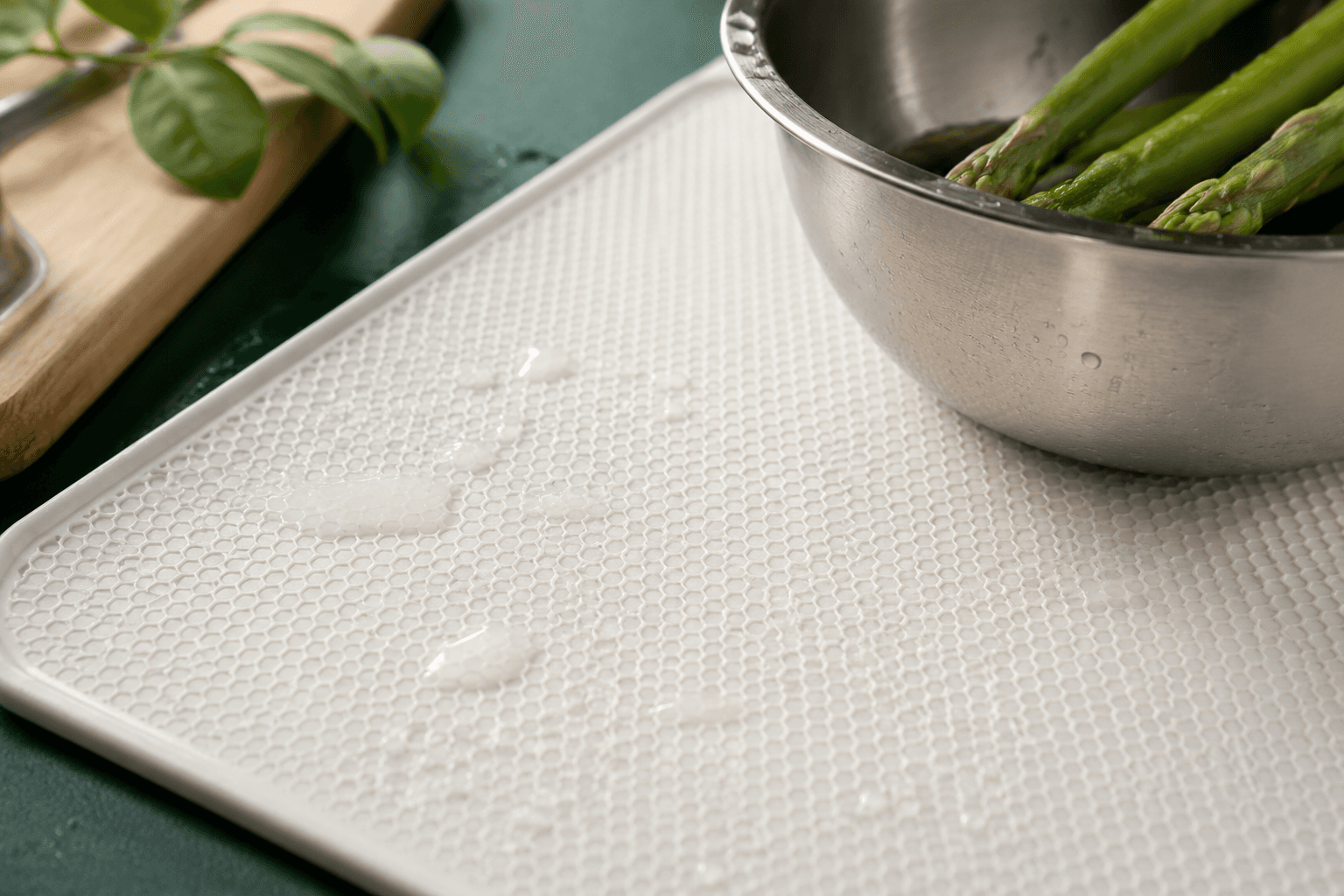
Food-grade silicone is dishwasher safe and heat-resistant — ours up to 230 C / 446 F. Wash before first use, dry fully to avoid trapped moisture, and avoid abrasive scourers that can mark the surface. Our food-contact pieces are made from material compliant with FDA 21 CFR 177.2600 and LFGB tested.

Keep drains clear
04

Keep drains clear

A simple mesh screen over the drain stops the build-up that causes slow draining. Empty it into the bin rather than pushing scraps through. Rinse strainers and screens daily — a thirty-second habit that prevents most blockages.

Ready to set up your sink?

Shop the range